 admin
adminWhen to Start Follicle Monitoring?
When to Start Follicle Monitoring? | Expert Advice from Dr. Meenu Singh
Follicle monitoring is a critical part of fertility and reproductive health, especially for women trying to conceive or those with irregular cycles. But when should you start follicle monitoring? The timing is crucial, and as an experienced gynecologist in Noida, I’ll guide you through this process, explain its importance, and clarify common misconceptions that could affect your fertility journey.
What is Follicular Monitoring?
Follicular monitoring refers to tracking the development of follicles in the ovaries using ultrasounds and blood tests. This helps determine the best time for ovulation and can also provide insights into any underlying reproductive issues like PCOD (Polycystic Ovary Disease), hormonal imbalances, or endometriosis.
Follicle monitoring helps monitor the growth of follicles in the ovaries, guiding your ovulation study and helping you optimize your chances of conception.
1️⃣ Signs Indicating It’s Time for Follicle Monitoring
When should you start follicular monitoring?
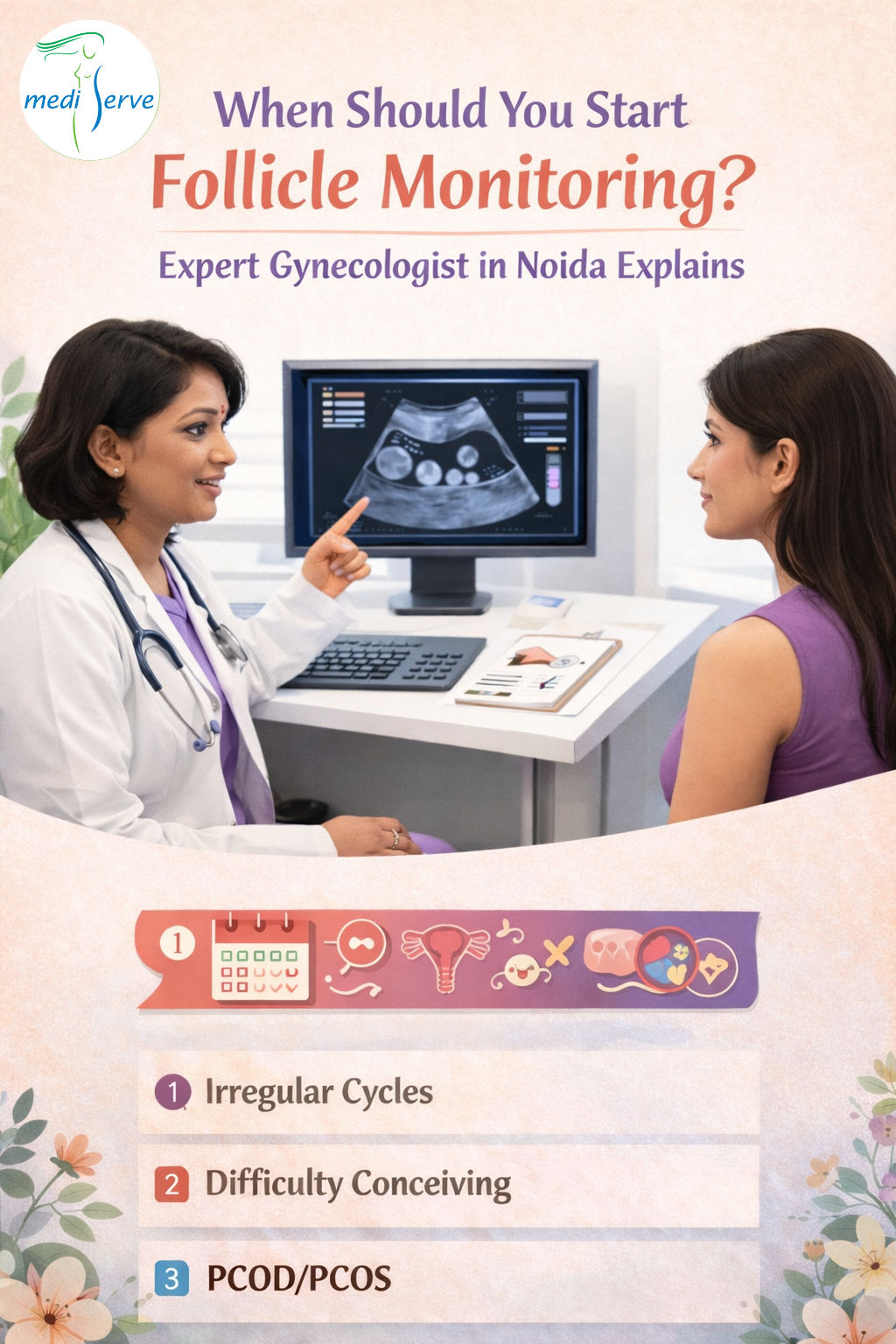
The decision to begin follicle monitoring depends on a variety of symptoms and health conditions. Here are common signs that could indicate it’s time to see a gynecologist for follicular monitoring:
- Irregular Periods: If you have irregular cycles or no periods for months, it could indicate ovulation issues, making follicle monitoring essential.
- Difficulty Conceiving: Couples trying to conceive for over 12 months without success should consult a gynecologist. Follicular monitoring helps detect any hidden ovulation or hormonal issues.
- Polycystic Ovary Syndrome (PCOD/PCOS): Women with PCOS typically face hormonal imbalances that can interfere with ovulation. Follicular monitoring helps track ovulation and manage PCOS symptoms.
- Previous Pregnancy Complications: Women who’ve had miscarriages, ectopic pregnancies, or difficulties during previous pregnancies might benefit from follicular monitoring to ensure a healthy conception cycle.
- Age-Related Fertility Concerns: Women over 35 years old should consider early follicle monitoring to identify any age-related fertility challenges.
If you’re experiencing any of these symptoms, it’s best to consult a gynecologist for a thorough evaluation and begin follicular monitoring near you.
2️⃣ When to Start Follicle Monitoring?
The ideal time for follicle monitoring depends on your menstrual cycle and ovulation patterns.
Typically, follicular monitoring begins on day 10 to day 14 of your menstrual cycle (day 1 being the first day of your period). It continues until ovulation is confirmed, which usually occurs around day 14-16 of a typical 28-day cycle.
For women with irregular cycles, follicle monitoring may begin earlier or later. The goal is to track the growth of follicles and detect ovulation — the time when your ovaries release an egg for potential fertilization.
Key Considerations:
- Timing: Start follicle monitoring around 10-14 days into your cycle.
- Cycle Length: The timing of your monitoring may shift depending on your cycle length.
- Frequency: You might need multiple visits, depending on how quickly the follicles develop.
3️⃣ The Process of Follicular Monitoring
Follicular monitoring involves ultrasounds and blood tests to track follicle growth and hormone levels.
Ultrasound: A transvaginal ultrasound is used to observe the follicles in the ovaries. Your gynecologist will monitor their size and growth as the cycle progresses. Once the dominant follicle reaches a size of about 18-24 mm, it is ready for ovulation.
Blood Tests: Hormone levels, such as estrogen and luteinizing hormone (LH), are also checked. These hormones fluctuate during the menstrual cycle and indicate when ovulation is approaching.
How Often Should You Visit?
Depending on the speed of follicle growth, you may need to visit the clinic 2-3 times per cycle. Once ovulation is detected, your doctor may advise you on the best time for intercourse or provide fertility treatment options if needed.
4️⃣ Common Misconceptions about Follicular Monitoring
As a trusted gynecologist in Noida, I often hear patients ask about the effectiveness and necessity of follicular monitoring. Here are a few common misconceptions:
- “Follicular monitoring is only for women trying to conceive.”
- False: Follicular monitoring is not limited to fertility treatments. It is also important for PCOD management, ovulation studies, and menstrual irregularities.
- “It’s expensive and not worth the cost.”
- False: While follicular monitoring may involve multiple visits, it can actually save money in the long term by identifying issues early and preventing more costly treatments down the line.
- “You only need follicle monitoring if you are older or have fertility problems.”
- False: Young women with irregular cycles or PCOS can benefit from follicle monitoring too, as it provides vital insights into ovulation and reproductive health.
- “Ultrasounds during follicular monitoring can harm my fertility.”
- False: Ultrasound monitoring is safe, non-invasive, and helps ensure optimal conditions for ovulation, especially for those seeking to conceive.
5️⃣ Why Follicular Monitoring is Important for Women’s Health
Follicular monitoring plays a crucial role in identifying any ovulatory dysfunction or underlying reproductive health issues. It provides valuable insights into:
- Optimal Timing for Conception: Helps couples time intercourse for the highest chances of conception.
- Managing PCOS: Tracks the development of follicles, ensuring women with PCOS have a better understanding of their ovulation window.
- Identifying Hormonal Imbalances: Detects irregularities in hormone levels that may affect menstrual cycles or fertility.
- Ensuring Healthy Ovulation: Provides reassurance for women who are trying to conceive but are uncertain about their ovulation cycles.
Conclusion: Start Follicle Monitoring Early for Better Health
Starting follicular monitoring near you is an important step in maintaining reproductive health. Whether you’re planning a pregnancy, managing conditions like PCOS, or just checking your ovulation patterns, follicular monitoring in Noida can give you the clarity you need.
As an experienced gynecologist, I believe that early detection through follicular monitoring provides the best chance for healthy conception and long-term reproductive well-being. If you’re ready to take the next step or have concerns about your fertility or menstrual health, book a consultation today.